Blog

Good Tea Habits – Path To Have a Best Cup of Tea
Good Tea Habits – Path To Have a Best Cup of Tea

‘Good tea habits’ hope you feel bit uncommon or unfamiliar feeling with today’s topic. But as a tea lover, this is a topic you should know. So let’s have a look on good tea habits that are worth following.

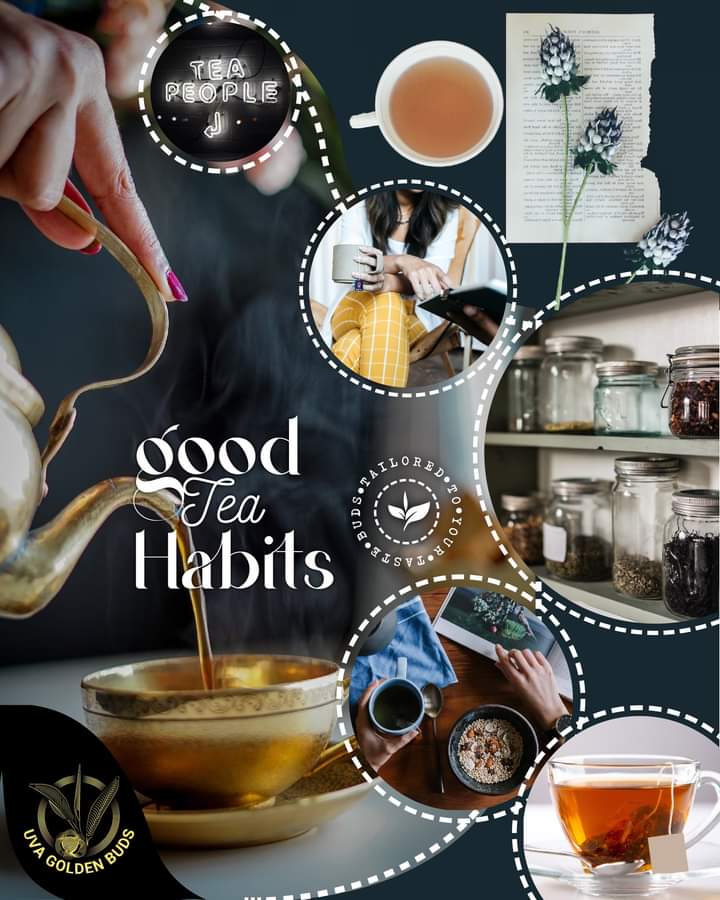
Good tea habits begin with handling the tea as a customer. First good habit is proper storage of your tea. Tea is comprising with hygroscopic particle which is having low moisture content. So it is very important to store your tea is in dry place and put them in an air tight containers. Otherwise they will absorb atmospheric moisture and started to decay. Without proper storage conditions tea will lose its unique aroma as well. Since it can absorb air born odors with loose type containers and mix storage with odor releasing compounds. Next important one is handling of your favorite tea. You should always handle your tea with clean and dry hand with dry equipment to avoid contaminate tea by moisture.

Now we move to the preparation of tea. following proper habits in brewing will enable you to have a cup of tea in its original taste. Using the fresh quality water is an important habit in brewing tea. hard water will not give the absolute taste of your tea. so you have to avoid use of hard water in preparing tea. Next one is about the water temperature. You have to be conscious about the proper temperature of the water that is suitable for your tea type.

 As an example 212 0F is the best temperature for black tea and herbal tea while 175 0F is best for green tea. Also the brewing time affect the taste of a tea cup. Leaving the tea to boil in a pot or other container for long time will differentiate the taste and aroma of the selected tea type of yours. For black tea and herbal teas best brewing time is 5 minutes at 212 0Fwhile it is 1-3 minutes in 175 0F for green tea. In brewing process, you have to be careful even in pressing the tea particles in straining process. If you are using tea bags do not squeeze it harder before it takes out from the cup, this is same for the other types of strainers too. Pressing or squeezing the soaked particles hard will take more tannins out form the tea which make your cup of tea more bitter in taste. 

Next is consuming your cup, what would be the appropriate habits in drinking? Even though, we have not taken seriously, drinking tea is not a process only concerning about the taste. While your tea is hot you can experience the aroma of it which creates a soothing effect on your mind and body. Do not rush to sip your tea while it is too hot or too cold. Let it comes to a certain temperature that your tongue is comfortable and you can feel the taste. Also if you care adding some other ingredient to the tea, there are certain points that you have to consider carefully. You have to keep in mind our base is tea and not the additional compound to dominate the features of your tea cup. Not only that but also be vigilant to add the proper amount of the ingredient to preserve the quality and other properties of your tea. Always try to add healthy compounds to your tea as additional ingredients.

With the knowledge of these proper tea habits, always keep exploring the new tastes of tea and enjoy your day today life with tea.

Withering Process in Black Tea Manufacturing

Withering Process in Black Tea Manufacturing

After gathering knowledge about plucking process of fresh tea leaves, next comes to the manufacturing procedure of black tea. Very first step in manufacturing black tea is withering. Withering is a process which is mainly oriented in reducing moisture of fresh tea leaves into a desired level that can be ideal for the rolling process. In this process fresh tea leaves will spread on the special structure prepared for withering and let them comes to the desired moisture level.

There are two major methods in withering. They are called tat withering and trough withering. ‘Tat withering’ is an old fashion traditional method of withering. In this method tats or the trays that made from bamboo material or other kind of natural material is used. Selectively picked immature tea leaves are spread in these tats and let them dry in natural air. Most of the times this method is used in traditional Asian tea manufacturing in small scale. The other method ‘trough withering’ which involves a special structure called withering trough. This is made by woods with the width of 6 feet and height of 3.5 – 4 feet with a convenient length. Inside the trough there is a mesh attached to the wooden frame horizontally as a table to facilitate the spreading of fresh tea leaves. These troughs are provided an artificial hot air with a control flow rate with an air flow fan operated mechanically. This air flow is responsible on moisture reduction to a desired level.

In the withering process relative humidity plays a critical role. Since the ambient air moisture level effect on moisture removal or the reduction from green leaf control in relative humidity is very much needed in succeeding this process. This measurement is taking as the hygrometric difference. Ideal hygrometric difference for withering process is 30 C between dry and wet bulb temperature. To control this hygrometric difference and maintain this relative humidity, withering areas are occupied with humidifiers. Considering the ideal time duration for withering it takes nearly 16 – 18 hours. When leaves comes to the desired withering level its colour and the aroma will be changed. This will helpful in identifying the desired withering level by an experience person.

Then these withered leaves go to the next step called rolling. In next article on this black tea processing series, we will read about rolling. Visit our blog frequently for completing your knowledge regarding the path to a quality cup of black tea.


Tea and Royalty

Tea and Royalty

Tea is a stimulating drink that is popular among all over the world. According to the ancient Chines stories tea was introduced as a beverage by the royalty.

Around 2737 BC, in the era of emperor Shennong tea has been introduced as a beverage. The story behind it is very interesting. According to the legend, emperor Shennong used to drink boiled water as a habit. One day, when he was drinking hot water outside accidently some leaves from a nearby tree has fallen into the cup of the boiling water and its colour also changed. When the emperor drink that water he felt a refreshing taste and a nice aroma. Then he started to consume that leaves as a brew in hot water and it was the origin of tea as a drink.

However, with the early ages of world explorations and trade relationships tea has been spread all over the world. First tea was popularized in Asian countries like Japan, Korea and India. When Europeans start the voyager quests and colonization process tea has introduced to the Europe as well. Mainly in British era, they have started tea as a commercialized plantation crop in colonized countries like India and Sri Lanka. With this plantation process best quality teas were introduced to the European countries like England, Scotland, France and Italy etc. In this era of colonial period, most of the higher society families had the access to colonies and these plantations. So tea becomes the popular item of the higher society including the royalty.

In European countries, especially in England and Scotland evening tea parties were very popular among noble families. Even royal tea parties were organized. Royal guests and noble families were invited to these parties. In these royal tea parties there are special foods and refreshments which are served as a tradition. Most popular of them are sandwiches, egg salads, cream cheese and different types of cakes and cookies. There were people who were trained to serve and follow the traditional arrangement of these functions. Also their evolved some traditions to follow in these tea parties as noble people. In the beginning, black tea was the only type of the that used in most of the times.

In modern days, green tea, herbal tea and many other luxurious and specialty types of teas are also used in these royal tea traditions. And there is some arrangement in the world to experience the royal tea culture as well. Sri Lanka is one of the most beautiful and suitable place for you to experience these tea culture. Ceylon tea is a symbol of quality that always served the royalty from the beginning. So do not hesitate to experience the tea and royalty with the cup of Ceylon tea.


Tea Blending

Tea Blending

What is the first idea that came into your mind by the time you read the topic? You may have heard about tea blending or you may be not knowing anything about this process. So let us have an idea on tea blending. 

Tea blending is the process of combining or mixing different teas to obtain the desired quality final product. This blending can be combining two tea grades, flavours, aroma compounds or different herbal ingredients. With this combination of desired component final product is consist with some different characteristics from the ingredients in their pure type. 

When it comes to the combination of different particles or grades, most of the times it aims the control of liquor characteristics. In Ceylon teas, there are three different categories as high, medium and low grown tea according to the elevation. Low grown teas are having dark liquor where high and medium teas are having light liquor characteristics. As an example, if there is a combination of high or medium grown tea with low grown Ceylon tea it will help to adjust the liquor colour and aroma as the requirement. This blending will result a medium coloured tea with a new aroma and taste. In this type of different tea blending, blending ratio plays a critical role. Depending of the percentage of the tea types desired characteristics of the final product will differ.

Next type is combining a flavouring agent to the desired type of tea. Tea type can be black, green, yellow or white tea etc. In this blending main objective is combining desired flavour to the tea. These flavouring agents can be natural or artificial. There are different ways of blending these flavours to the tea. Most popular way of adding artificial flavour is mixing dried tea with flavouring agent and let the tea particle absorb that flavouring agent into the particles. But in the case of natural flavouring agents, dried particles of the natural agent will mix with tea and let those particles as a part of the tea mixture. Most common natural flavouring agents are ginger, vanilla and cinnamon etc. Process of adding artificial aroma compounds also much similar in the method as addition of artificial flavouring agents. But in the process of adding natural aroma compounds natural agent will mix with the dried tea particles for desired time to absorb the aroma and then remove the natural agent. Best example is addition of jasmine aroma to the tea.

Last one is addition of other ingredients ae a blend. Most of the times these ingredients are herbal tea agents like ranawara, ginger, cinnamon, dried fruit powders etc. this method of blending will differentiate the all characteristics of every single ingredient in the final blend including flavour, aroma, liquor colour and taste as well. There are some special machines designed for this blending process in commercial scale. In present days Ceylon tea blends are most popular among the tea consumers around the world. If you are interested in experiencing different tea blends Ceylon tea blends will be an excellent choice for you.


Tea Tasting

Tea Tasting

Tea tasting is an artistic process that determining the quality and the marketing value of the tea. This process mainly includes two parts. First one is inspecting leaf appearance when the other one is tasting of infusion.

In the process of leaf appearance assessment, taster is focus on the colour, particle size and the aroma of the leaf particles. Depending on the grade expected colour and the desired particle size is differing. There is a special glossary with specific terminology. Black, blackish and brown are the most common terms used in black tea particles to indicate the colour. When it comes particle size and nature terms differ from grade to grade as mentioned before. In open grades or the leafy grades bloomy and curvy are usual terms for explaining the particle nature. Regarding the aroma smoky, fiery and fruity are commonly used terms. Based on these three parameters overall value for the leaf particles are given.

Interesting part comes next, which is tasting the liquor. For this you have to have a well-trained tongue. It takes lot of time and continuous effort of tuning the tongue for tasting tea. in this tasting process, taster allow the infusion to pass along the tongue by stimulating the taste buds of the tongue, but without swallowing the infusion. 

Then the taste and aroma felt by the taster will be taken into the account for the valuation. Liquor colour plays and important part in tasting the infusion of the tea. it will describe as the naked eye appearance of the taster. Liquor colour differs according to the elevation and the grades in Ceylon tea. 

The other critical thing is preparation or the infusion process of the tea for the tasting. In this process 3 – 5 g of tea will be measure using an accurate balance. For the brewing process water should be below 90 0C. Then the this boiled water will pour in to the special brewing cup with weighted tea and let it sit for 3 – 5 minutes and strain in to a tasting cup. Then the taster starts the liquor tasting and appearance of the infused particles for the final valuation. As an overall value depending on the observations in all dry leaf appearance, infusion and infused particle appearance, taster will give a valuation to the selected tea sample. This will be the minimum value for the auction catalogue.

So this is a brief introduction on tea tasting for awaking your curiosity. If you are interested further, just keep in touch with our blog for more including terminology and tea grades in interesting future articles.


Rolling Process in Black Tea Manufacturing

Rolling Process in Black Tea Manufacturing

Let us continue to another black tea processing step this time. Last time we have got the knowledge on withering process. Next step in black tea manufacturing is rolling of the withered green leaf. 

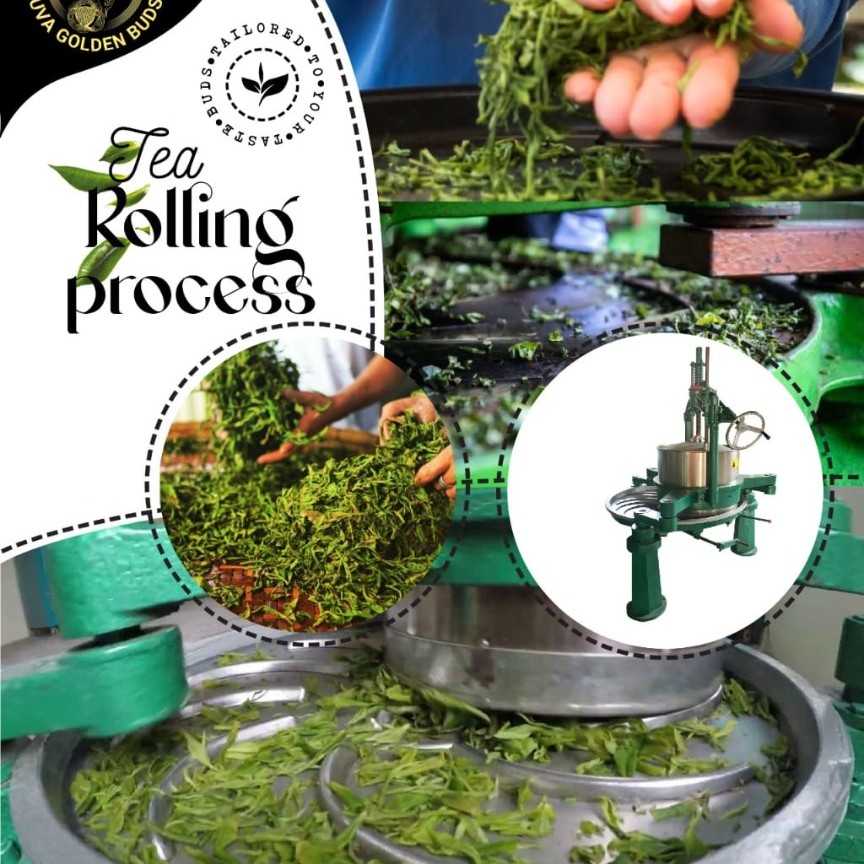
Rolling is very important since it is the first most step that will facilitate the oxidation process in tea leaves. Fresh tea leaf content the polyphenol and polyphenol oxidase enzymes in separate cells without mixing each other. To facilitate the oxidation process which is responsible for the specific black colour and liquor colour, these two compounds should be mixed. In the rolling process, cell walls of the tea leaves will be ruptured and polyphenol and polyphenol oxidation enzymes will mix together. Then the natural oxidation will be started. This is why rolling plays a critical role in black tea manufacturing.

There are two methods of rolling as mechanical rolling and manual rolling. For mechanical rolling method rolling machines are used. These machines are made with roller table with battens where tea is placed for rolling purpose. Rolling jacket is the other major part which is located at the top of the table attached to a shaft which facilitate circular motion. These machines are mainly working with electrical supply. 

Pressure can be applied as it needed in rolling process. Roller tables can be charged manually or mechanically. Then the machine will start the rolling with a given speed and a pressure. Most of the times in large scale productions mechanical rolling is very much suitable. 

When it comes to the manual rolling, it is the very traditional and primary method which is still used in small scale manufacturing of black tea. most of the times handmade tea producers are using this method. In manual rolling withered tea leaves will be put in a cane or bamboo strapped flat baskets. Then tea leaves will be rolled by the hands pressing on the flat surface. Leaves will rupture and curled by the rough straps of the basket. When leaf particles come to the desired appearance rolling can be stopped and take them to the next step. This manual method is still used since it gives a unique colour, flavor and aroma with desired particle appearance in hand made tea. 

At the end of the rolling process withered leaves become curled, coppery colour particles with a fruity aroma. To obtain the desired characteristic rolling time is one of the very important fact. Because of that rolling programs are used in large scale production of black tea. in this rolling programs, roller charging intervals with a specific time will be mentioned. Following this program will avoid excessive rolling which leads to over fermented dark colour tea with dull appearance. At the end of the rolling of a batch rolled leaves will call as “Dhool”. The dhool will discharge by the discharge door in the roller table. These dhools will take in to the roll breaking process and large paticles will undergo rolling process again which is called as second dhool. 

Hope this article provided a rough idea on the rolling process until we meet with the next article about roll breaking process.


Foods pairing with tea

Foods pairing with tea

How do you like to taste a cup of tea? Pretty much sure, that you have different suggestions. Some of you may like pure black tea without addition of any kind of sweeteners or flavor while the others like tea with milk or flavors. Both of those groups have people who preferred food items or refreshment with tea. This article is for the people who love to have tea with some foods that paired with tea.

Tea is a popular all over the world among different regions. So there are different types of specific foods paired with tea depending on the culture as well as the food habits. If we looked at the purpose of taking foods or refreshments with tea there are more than one. one is to overcome some properties of tea like bitterness in dark type tea. The other one is to add some flavor or foodies value to the tea. The type of food may differ the time, purpose or the occasion that they take the tea.

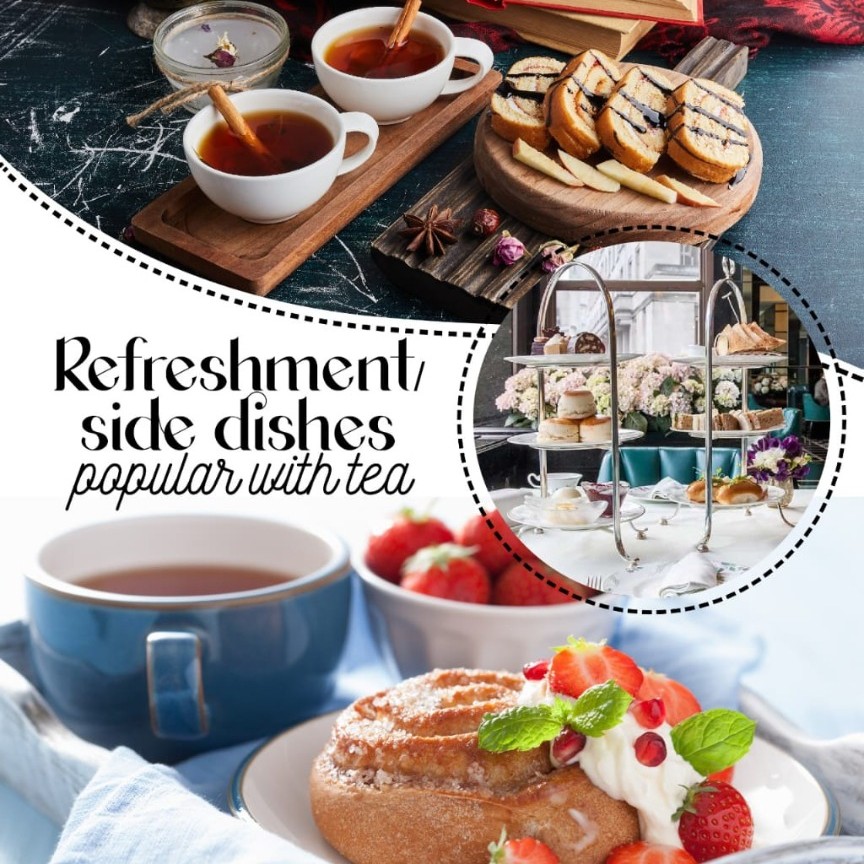
In European or western countries sweets are very popular with any type of teas. Among those sweets cakes and cookies are the most prominent. When it comes to the cakes there are many more varieties. Butter cakes and chocolate cakes are very commonly used food with plain tea and milk tea as well. Considering the cookies, butter cookies are comes first in the list as good with teas for long time. 

Sweetness of these cakes is a main reason that it can paired with tea. The other prominent food item is sandwiches. Spicy sandwiches are preferred by some of the European tea lovers. Not only that foods like brownies, pastries and buns etc. are paired with tea in this culture.

Now we will move to the Asian region. In Asian countries, they are traditionally spice lovers. Since this spicy food culture, most of the foods paired with the tea are spicy foods. Spicy fried foods like Samosa, Wade, Rolls with spicy fillings are very popular paired foods with tea in countries like India and Sri Lanka. These types of spicy foods are mostly paired with the sweetened tea. But in Asian countries there is a tradition of consuming tea without sweeteners. These pure teas without sugar is paired with sweets like Indian traditional sweets, traditional Sri Lankan Sweets etc. In addition Asian countries like China, Japan and Korea they have traditional foods like dumplings and special rice cakes paired with teas. Some of the traditional foods are paired with special type of teas like green tea and dark tea. Most of the times different types of sweets like sweet rice cakes are used with bitter type of teas.

Next main tea consuming region is Middle East region. They have their own traditional foods paired with their favorite black tea types. Traditional Turkish semolina cakes called “Basbousa” and other sweets made with dates, plums and honey are the main types of paired foods with tea in this region. Cakes and cookies are also popular paired food in this region too.

Hope you all have your special type of paired food with tea. After reading this article you can try this regional specific traditional foods paired with tea and experience a different taste with tea. Enjoy your tea with new paired food in hand every day for a different experience.


Ornamental Tea

Ornamental Tea

When you hear the word ‘Tea’ what comes to your mind instantly. Most of you will say it is a hot cup of tea with a cloud of smoke. Instead of the beverage type tea, have you heard about ‘Ornamental Tea’. Maybe you have heard it as tea roses.

These type of teas have main two species called Camellia japonica (Tea Roses) and Camellia sasanqua. Tea roses (Camellia japonica) is used popular among people as it has beautiful flowers in different colours. This plant also grown in similar condition as Camellia sinensis. Tea roses are love to grow under shade in well drained acidic soils. When it comes to the characteristics of the plant, it is an ever green plant with thick, glossy and serrated leaves. Flowering of the plant is occurred during late winter and early spring. You can find different colour tea roses. Pink, Red and white are most common and attractive colours in this flowers. Flowers of this plant are similar to a rose. Mainly tea roses are used in gardening. Tea roses helps to create colourful and attractive gardens with its unique flowers. This plant is used in medicinal purposes in countries like Japan, China and Korea. Both flowers and leaves are using in these traditional medicines. They used these medicines for treating stomachic illnesses, bleeding and inflammations. 

The next type, and Camellia sasanqua is native to Japan. It is also an ever green plant with oval shape, dark green and serrated leaves. It has small flowers than tea roses (Camellia japonica).  Flowering occurs in winter season of the year.  Both leaves and seeds Camellia sasanqua are used in different purposes. Leaves of this plant use to prepare some traditional tea types like matcha tea and black tea. seeds of this plant use to derive oil which can use for cooking, lightening, lubricant and cosmetic purposes. In cosmetic industry this tea seed oils are used as skin clearance and anti-acne agent. As it proven in cosmetic test it has an anti – inflammatory agents which act against acne causing agents. Because of that most of the cosmetic products contains this oil.

You can learn more about these amazing plants by referring many more articles and also add them to your beautiful garden to experience colourful nature with a tasty cup of tea in your hand.


Instant Tea

Instant Tea

Instant tea is a form of tea that can make a cup of tea soon after adding water into the ready-made tea formula. Most of the times instant tea comes in powder form. You may have taste an instant tea if you are a tea lover.

When it comes to the history of instant tea, it was initially introduced in United Kingdom in 19th century. First it was a combination of tea powder and the milk powder. Gradually the quality of instant tea was developed. With the evolution of technologies like spray drying milk tea powder was introduced to the European market. This instant tea was spreader tea markets all over the world with the time.

Considering the content of the instant tea, it mainly contents tea as the base ingredient. With the tea as the base ingredient there can be sugar, milk, flavoring agents, herbal ingredients etc. with this instant tea. Most of the times instant tea powder id prepared by spray drying process. First tea brewing process is conducted properly. Then the infusion is subjected to the spray drying process and derived the powder. Preparation process of the instant tea is very easy and time saving.

You have to add the instructed amount of instant tea powder into a container and add the sufficient amount of hot water to dissolve the content. After mixing and stirring your tea is ready. If sweeteners are not added, you can add them as your preference.

This instant tea is very much popular in European market. Main reason behind the popularity of the instant tea is easy preparation and time saving. Also instant tea has specific taste. Since the brewing process id previously conducted in technically correct manner, it has a proper taste. Even someone who do not know the correct brewing technique can have a perfect cup of tea using instant tea. the other benefit is you do not want specific equipment for brewing only you can manage it with a cup of boiling water and a simple spoon.

Next time you can taste an instant tea easily to have an awesome experience with different type of tea product in your hand.


Roll breaking process of tea manufacturing

Roll breaking process of tea manufacturing

Roll breaking is the next step of tea manufacturing after the rolling process. In the process of roll breaking, rolled tea leaves which is called as ‘Dhool’ will be separated depending on the particle size.

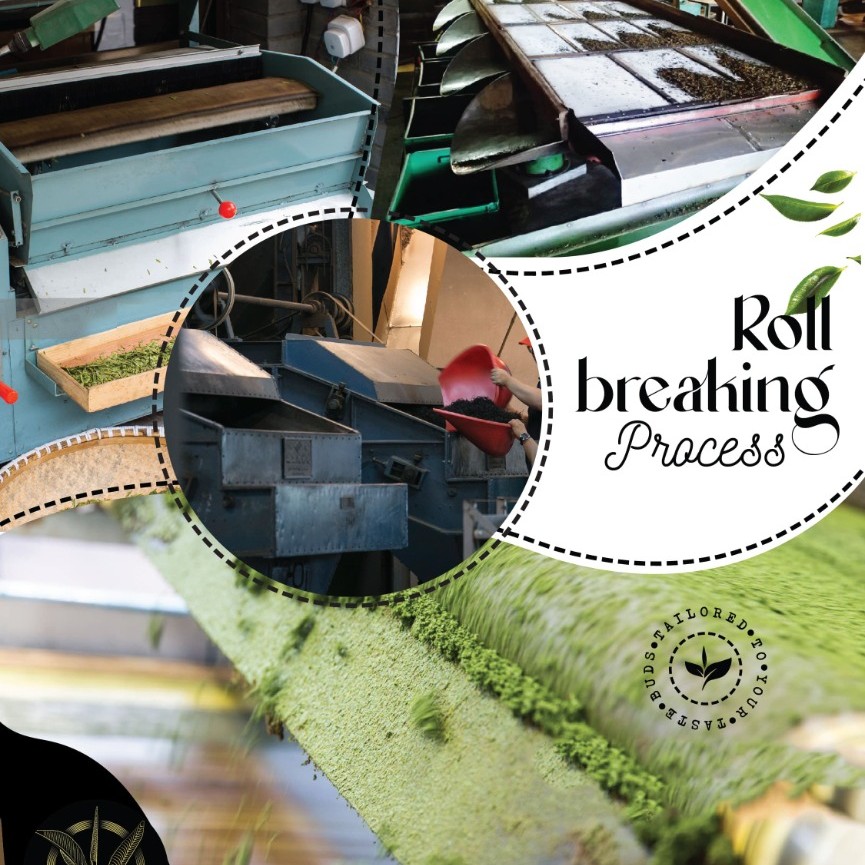
Different machineries are used for this roll breaking process. These machines are different types of sifters. Almost all the machines are made with different mesh sizes attached to a wooden or steel frame. These mesh sizes are organized as a series where the size is in increasing order or decreasing order. In this step, dhools derived from the rollers will be loaded to the first tray of the roll breaking machine and let the particles to strain from the mesh to be collected to a container. Then the remaining particles in the tray will be charge to the second tray with larger mesh than the first tray and repeat the same.

These different size particles will be subjected to the fermentation separately. This is the beginning of deriving different tea grades depending on the particle size. The remaining large particle in the last tray called ‘big bulk’. These particles can be sent to the rolling process again or will ferment and dry them to resize them into small particles using tea cutters.

Roll breaking is the next step of tea manufacturing after the rolling process. In the process of roll breaking, rolled tea leaves which is called as ‘Dhool’ will be separated depending on the particle size.

Different machineries are used for this roll breaking process. These machines are different types of sifters. Almost all the machines are made with different mesh sizes attached to a wooden or steel frame. These mesh sizes are organized as a series where the size is in increasing order or decreasing order. In this step, dhools derived from the rollers will be loaded to the first tray of the roll breaking machine and let the particles to strain from the mesh to be collected to a container. Then the remaining particles in the tray will be charge to the second tray with larger mesh than the first tray and repeat the same.

These different size particles will be subjected to the fermentation separately. This is the beginning of deriving different tea grades depending on the particle size. The remaining large particle in the last tray called ‘big bulk’. These particles can be sent to the rolling process again or will ferment and dry them to resize them into small particles using tea cutters. During the roll breaking process fermentation of this rolled tea is continued as started in rolling process. Because of that it is very important to control the roll breaking time properly for preserving the final quality of the tea.

There are mainly two types of orthodox tea grade series as leafy grades and dust type tea grades in addition to special grades and extra special tea grades. Roll braking is a common process in all kind of these mentioned grades. Machinery types can be differing according to the desired grade. It is important to have skilled and experienced worker in this process is critical in obtaining quality tea as a final product since the degree of fermentation depend on it.

Hope you have got a basic idea on another important step of black tea manufacturing. Meet you with the detailed article on fermentation process in next time. 


Special Tea cultivars around the world

Special Tea cultivars around the world

As we all know tea is one of the most popular non – alcoholic beverage consumed all over the world. Tea is produce using the tender shoots of Camellia sinensis plant. According to the legends, tea has been originated from China. But genetically there are main three varieties originated from different areas of Asia. First one is China type teas that are believed to be originated from China. Next one is Assam type teas from India while the other one is Cambodia type originated from Cambodia.

In the domestication process and commercial cultivation breeding process was appeared in the picture. Using scientifically designed breeding processes, newly developed tea cultivars were introduced by research bodies. These cultivars were mainly oriented towards the high yield, pest and disease resistance and quality of the final product. Some cultivars were developed for special tea production. Let us have a look on such kind of special tea cultivars spread all over the word.

In China, where tea was originated have some popular tea cultivars specially using for special tea productions. Da Bai is a cultivar that is using for the manufacturing of white tea and silver needle teas.

This cultivar is having a bud covered with silvery hair which is enable the special nature of silver needles. Da Hao is another cultivar which is having large leaf nature used for white tea production. When it comes to the traditional type of dark teas like Pu’er tea, Da Ye is the cultivar used for this microbial fermented tea. As we all know China is very popular for the traditional and unique green teas. The cultivar that is used to produce this green tea is Longjing 43.

Next we will look at Japan. Japan is also an Asian country which is having unique traditional teas with ancient tea traditions. Special green teas like Sencha, Tencha and Match which are used in traditional tea ceremonies plays a very important role in Japan. Yabukita is the special cultivar that is used in production of these teas. In Taiwan there is also very special tea cultivar that is used to produce milky Oolong tea which is believed to have a milky taste without adding the milk. A special cultivar called Jin Xuan is responsible for this milky nature of the Oolong tea produced in Taiwan. In Kenya there is a tea cultivar named TRFK 306 which is rich in anthocyanin cased purple pigmentations in the tender shoots and leaves.

Now it is time to look at Sri Lankan tea cultivars. Sri Lanka is popular for quality teas under the Ceylon tea logo. In Sri Lanka most popular and prominent special tea cultivar is TRI 2043. This cultivar is having a bud covered with very fine silvery hair. This cultivar is rich in anthocyanin which make its tender parts reddish – purple pigmentation. This silver colour hairy buds are used for making silver tips and golden tips which are considered as specialty teas with higher market value. Silver tips comes under the non – fermented tea category as a type of white tea where golden tips made by coating the silver tips with brewed black tea infusion.

In the introduction of these special tea cultivars, national research bodies regarding tea of the relaxant country plays a major role. They are contributing decades of researches for inventing such cultivars by specially designed breeding programs. These programs involve lot of human and financial resources as it takes considerable amount of time as well. Also these breeding programs need highly developed technical skills and laboratory facilities. Even we have seen the final products these cultivars are priceless with their collective values.


Flavour Seasons of Ceylon Tea

Flavour Seasons of Ceylon Tea

Ceylon tea is considered as a symbol of quality tea in the world market for a long period of time. In Sri Lanka there are three main categorization of tea according to the elevation as high grown, medium grown and low grown tea.

There are different characteristic between these teas according to the elevation categories. High grown teas are having light liquor colour with a pleasant aroma. But low grown teas are the other side of this high grown in characteristics. Low grown teas are rich in dark liquor and low in aroma. Medium grown tea has medium characteristics in liquor and aroma. These tea types can be used as the preference of the customer and the purpose and time of the tea cup.

Within these three categories there are flavour seasons of Ceylon tea. before moving to the different flavour seasons, let us know about the reasons behind the differences of the quality in teas at different flavour seasons. When the environmental conditions change it is directly affecting for the chemical composition of the plants. This same scenario is applicable for the tea crop also. When the temperature differences and the air moisture contents fluctuates, it effects on the chemical composition of the tea leaves. 

When tea is harvested during that special period of time will produce a tea with unique characteristics.

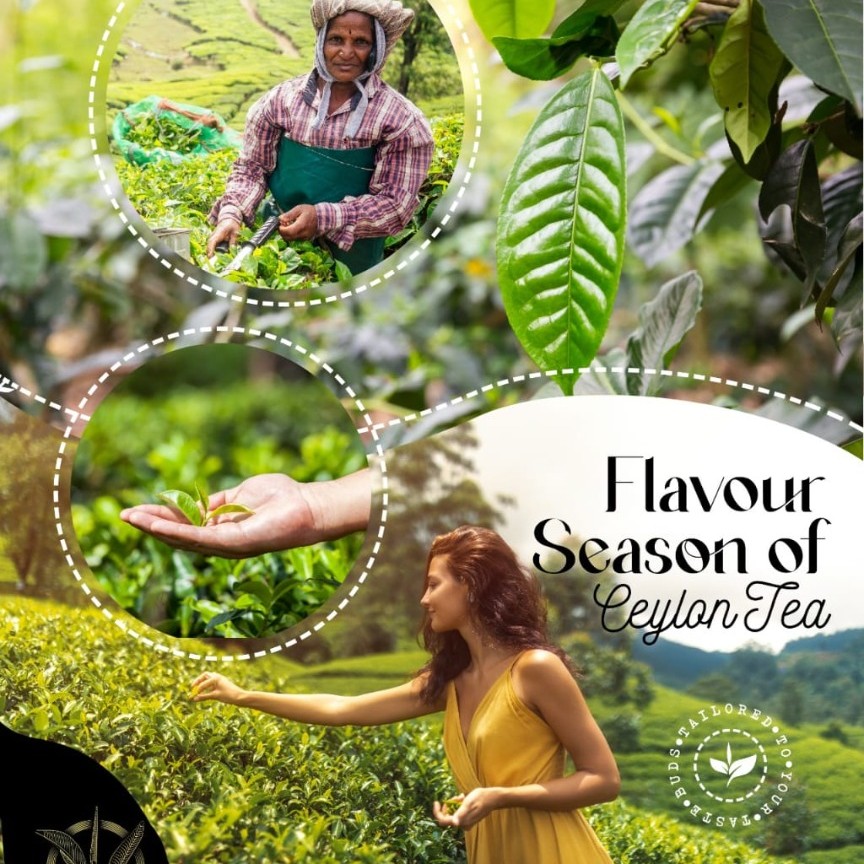
Ceylon tea has major five flavour seasons as Nuwaraeliya, Dimbula, Uva, Ruhuna and Sabaragamuwa. These seasonal teas are produced in a special period of time of a year when favourable climatic conditions are there within the region. Uva season is the most famous and demanded among these seasonal flavours all over the world. Uva seasons occurs during July and August of the year. It is the drought period for the Uva region. In this drought seasons dry wind comes across the country and circulate within the mountain rage of the Uva region. So plants are facing a stressful dry condition during this time. Due to this dry condition a chemical called methyl salicylate which is present in tea is produce in higher levels than the normal condition. This cause a unique aroma of tea during this period of time along with a special taste in Uva tea. This is the flavour season of Uva tea.

In Nuaraeliya and Dimbula, season occurs in February and March of every year. In this period appearance of the liquor and aroma changed slightly in favourable manner. For Ruhuna and Sabaragamuwa, seasonal flavour comes twice a year as February – March and July – August as the inter monsoonal incident occurs. This will enhance the characteristics of the low grown tea of these two flavour seasons. When you compare the taste and the aroma of the teas in these regions during the season and the offseason, you will definitely feel a difference in characteristics of the liquor. During these seasons market demand for Ceylon tea is higher according to various customer preferences.

 If you are a tea lover, you should definitely try these seasonal flavour to experience a marvellous and unbelievable diversification of taste and aroma of a tea growing in a small Island in South Asia.