
Blog

Hand – Made Teas

Hand – Made Teas

Hand – made or home – made teas are specialty teas which are manufactured in some of the tea producing countries. Before the invention of the special machineries and development of tea manufacturing as a huge industry, people made tea by their own methods for personal consumption. This may be a non – rolled dried tea buds, tender leaves or hand rolled type of teas. Let us discover the different methods and types of hand – made teas which are popular among the hand – made tea manufactures as well among the consumers.

Most common method of producing hand – made black tea is following the similar method of orthodox black tea production by basic tools and human hand. In this procedure, natural withering is conducted as tat withering using the tats made of bamboo straps, cane etc. Most of the times no artificial air flow will be supplied except the natural air. These naturally withered tea leaves will be rolled by hand or using a hand operated grinder. Some people are using the bamboo tats for this rolling process to roll the leaves in these rough bamboo tats. These rolled leaves are then moving to the drying process. This drying process can be conducted with the natural air flow or using a home – made furnace. Most of the times this hole procedure is adjusted and created by the producer. 

No parameter or conditions will be controlled as in large scale processing or no specific procedures are defined in this process. This procedure mainly produces open type black teas with large particles.

Green teas are also produce in this hand – made procedure. Matcha tea powder and Oolong tea are commonly produce in this hand – made type. In the production of hand – made Matcha tea powder, tea leaves are steamed first using the common steaming method using boiling water. Then steamed leaves are grind by a hand grinder after air drying them a bit or omitting the drying process. These grounded leaves are then made as small cakes using the wooden blocks and dry them using heat generated by firewood or charcoal. Dried cakes will be grounded in to a fine powder using a special hand grinder made of granite. Now, the Matcha tea powder is ready.

These type of black teas are made in like Sri Lanka too. Hand – made Green tea types are mainly produce in China and Japan. The specially of this hand – made tea is the unique quality characteristics. Because the manufacturing procedure is unique to the manufacturer, appearance, aroma, liquor and every other characteristic are unique. Even the sample of a hand – made tea produced by the similar procedure by different producers will be different in same characteristic. Since this specialty they are popular among the tea lovers who are seeking for different tastes in tea. In addition, there is a growing demand for this hand – made tea in the specialty tea market in the world. If you love to experience the processing of hand – made tea, try either of these process as if you can have a fist full of fresh tea leaves. It will end up giving you a unique hand – made tea to taste.
Green Tea

Green Tea

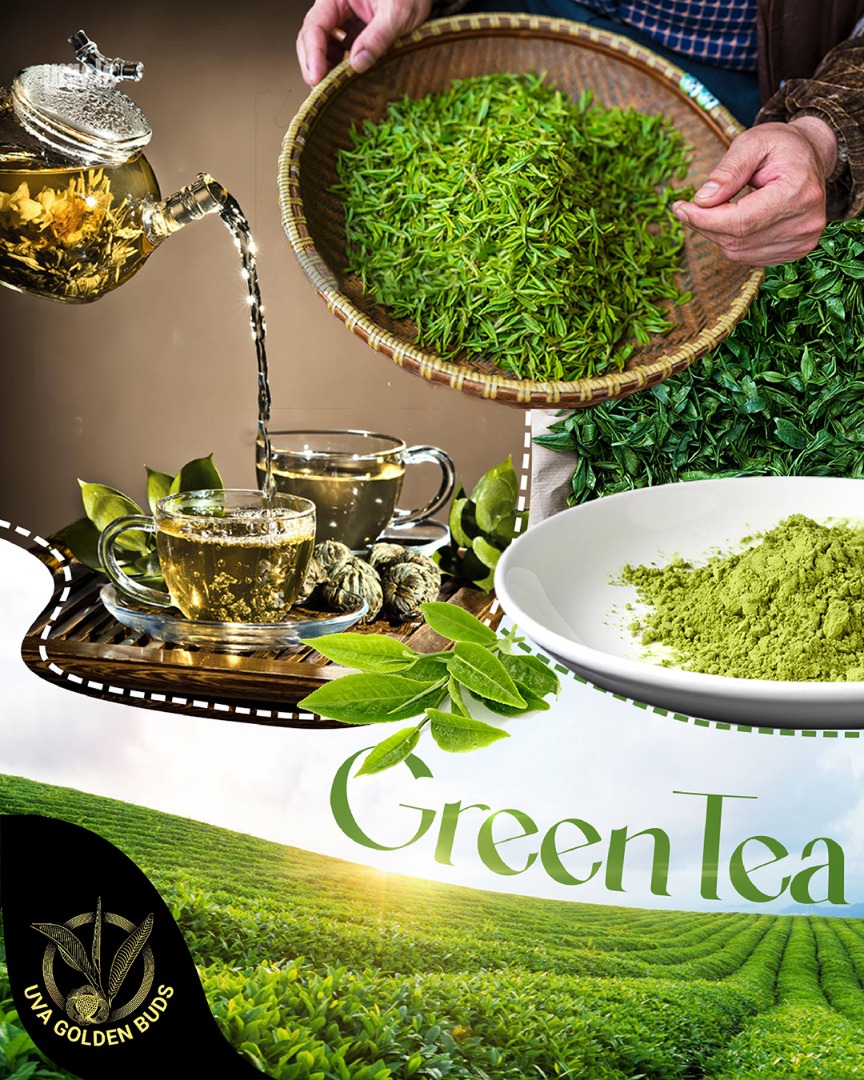
There are different types of teas popular in the world mainly based on their degree of fermentation. Green tea comes under the category of non – fermented tea which is having a light liquor combined with the bitter taste. Considering the production process of green tea, it is not undergoing the fermentation process. To deactivate or suppress the fermentation enzymes, tea leaves are steamed initially. These steamed leaves are rolled using the special type rollers called moon-rollers and rolled leaves are dried using dryers. Those are the basic processing steps of green tea manufacturing. There can be differences and modifications to this process according to the producing country, green tea type etc.

Most of the times green tea consist with large and open type leaf particles. If you observe the appearance of green tea, it is not black as black tea in colour but shows a light or dark greenish colour. Liquor characteristics of the green tea are also unique since it appeared as a very light greenish or yellowish colour when you brew it. Also there can be a specific fruity smell in the green tea differ from the grades.

 As a general idea, most of the times china type small leaf tea cultivars are preferred to make green teas. Considering the different types of green teas, Matchs tea powder, Sencha and Tencha are popular green tea types in the world. China and Japan are the most prominent countries that are producing green teas. They have a significant market segment in global green tea market.

In addition, Sri Lanka is also producing green tea. They are mainly producing green tea with open type large leaf particles which are selling as lose quantities, pouch or packets and green tea bags. Also Ceylon green teas include natural flavored green teas that are blended with herbal teas. These are very much popular among foreign visitors who would come to experience the Ceylon tea culture. Ceylon green tea industry is having both large scale and small scale green tea producers who are catering the local market and the global market as well. Ceylon green tea is a good choice for anyone who wants to experience a different taste of green tea in a different tea culture.


Flavored Tea

Flavored Tea

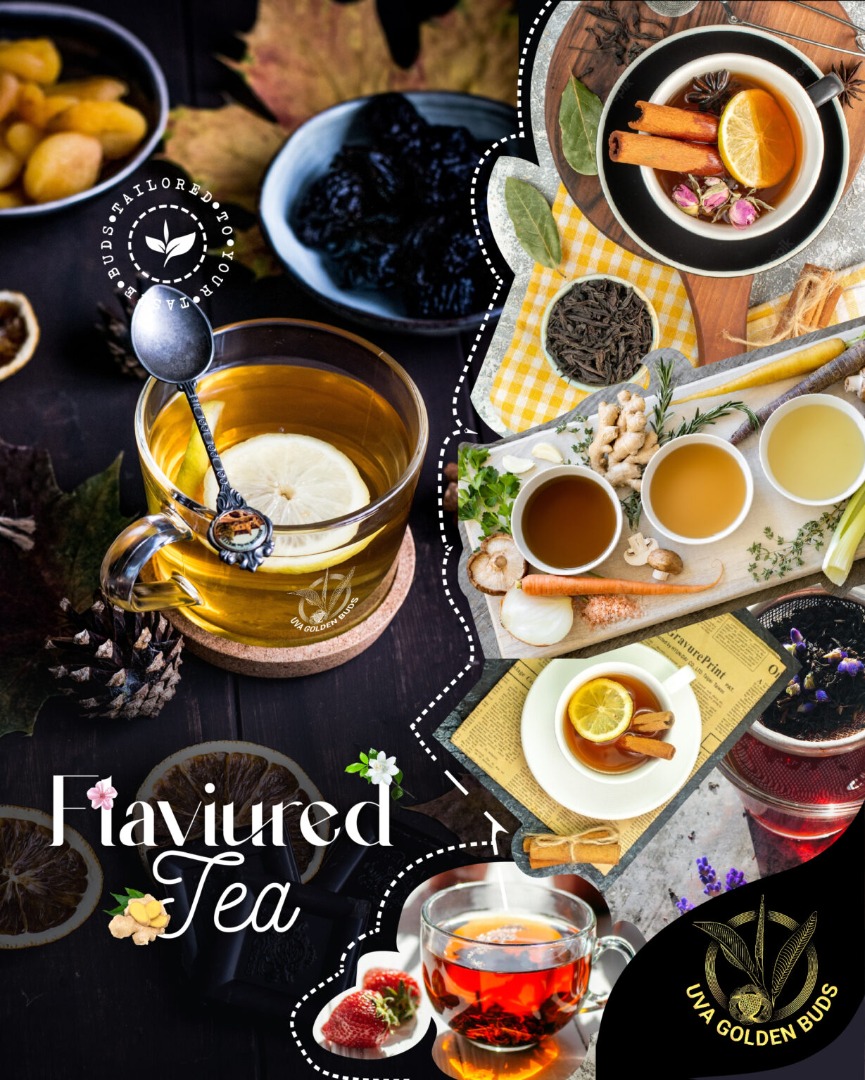
Flavored tea is prepared using the tea as the base material and adding natural or artificial flavor as desired by the manufacturer or buyer. Almost all the tea types like black tea, green tea and herbal teas are used as the base.

Most of the times natural ingredients are used as flavoring agents. Ginger, cinnamon, Jasmin, mint, lemon grass and some spices are most common and popular natural flavoring agents. In addition, different types of fruits are also used as flavoring agents. Lemon, Lime, blue berry and strawberry are some example for fruity flavors. Compounds response for the flavor and aroma of these natural ingredients are artificially produce and add to the tea in artificial flavoring process.

Combining or adding these natural flavors to the tea base, there are mainly two methods. In one method dried particles of the natural flavoring agent is directly added to the tea particles and introduce to the market. In the brewing process both tea and flavoring particles are brewing and liquor is combined with the tea flavor and the natural flavor of the flavoring agent. Ginger, lemon grass and sometimes mint also added as this dried particle. Spices like pepper, coriander and Cinnamon also added in dry grounded powder form as well in small particles. The other method is adding the flavoring agent in to the brewed tea infusion. In this method selected base is brewed at first and infusion is derived. Then the desired amount of fresh natural flavoring agent is added to the brew and served. Lemon, Lime and some other fruit extracts are added as this method.

When it comes to the artificial flavoring agents, almost every times they are added to the tea base in the blending process. In secondary manufacturing process blending is carried out with the artificial flavors. But addition of the Jasmin flavor and aroma to the tea takes a unique special process different from both methods described before. After the drying process of tea particles, they are mixed with the jasmine buds and let the aroma and flavor to absorb by the tea particles. Time will decide the strength of the aroma and flavor. After a desired time period, Jasmin flowers are separated from the tea particles. These jasmine tea is visibly similar as base tea without any mixed particle for flavor. But when you brew it, infusion is having all the flavor and aroma in it. It is miraculous in a way.

Hope this has added some knowledge on flavored tea to your mind with a fascinated desire on tasting a unique flavored tea.


Arabic Culture and Tea

Arabic Culture and Tea

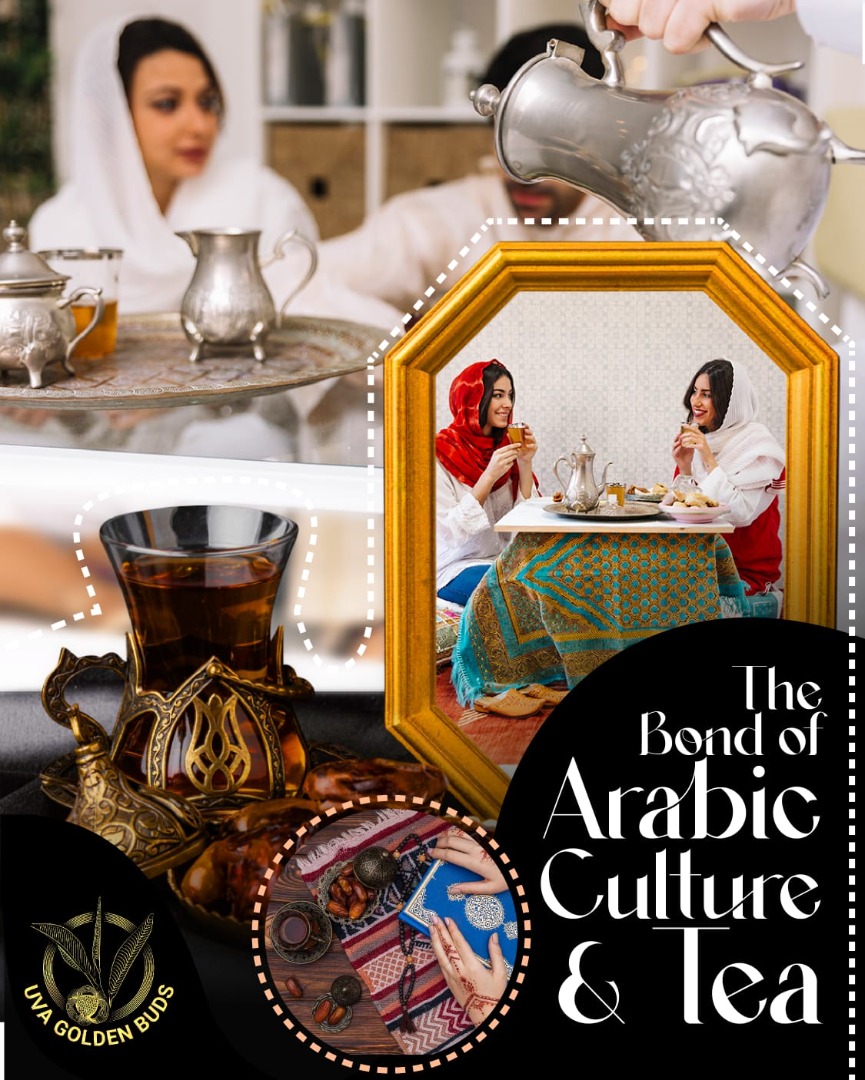
It is very interesting when you are getting the knowledge of the unique bond of Arabic culture and tea. Arabic culture is originated among the people who speak Arabic language and faith in Islamic religious view. Middle East countries are the center of this culture. Not only in the middle East countries, but also these cultural features have been spread all over the world with their religious faith in present.

When we look in to the Ceylon Tea Industry, Arabic countries are very important since they are one of the main buyer. Considering the past decade, tea consumption in Arabian countries has been increase nearly three times than previous. Main reason behind the rise in tea consumption is health benefits of tea like anticancer properties, minimizing the risk of heart problems, stimulation etc. Specially the ability of drinking tea by diabetic patients without and adverse effect on their condition.

Considering the types of teas that they have preferred, premium quality pure origin teas comes first. Among them different types of black teas and various blends of them are specially consumed by Arabian countries. Also they are interested in herbal teas as well as black tea. 

Dark or the heavy liquor black teas are in demand more than light liquor teas in Arabic markets. Countries like Turkey, UAE use black tea in their daily essential item. In evening gatherings, they preferred to serve teas for the guest and family members too. Since black tea is suitable for serving with sweets, it preferred over other types for tea parties.

In addition, several herbal teas are popular in Arabic countries. Especially different types of mint teas, chamomile tea, Anise tea, Cardamom tea, different types of green teas are well popularized among herbal tea consumers in this region. These herbal teas have special occasions for serving. As an example ‘Sage tea’ a type of herbal tea is served after the meal to enhance the digestion and gut comfort when Cardamom tea is serving before a meal to enhance the activity of digestive enzymes. Chamomile tea is used for enhancing a comfortable sleep while Anise served as medicine for flue with cough.

This interesting cultural features of Arabic region bonded with tea has been creating a beautiful picture itself while opening the path for middle east tea market venture seekers around the world.


Specialty Tea – A Memorable Experience For Tea Lovers

Specialty Tea – A Memorable Experience For Tea Lovers

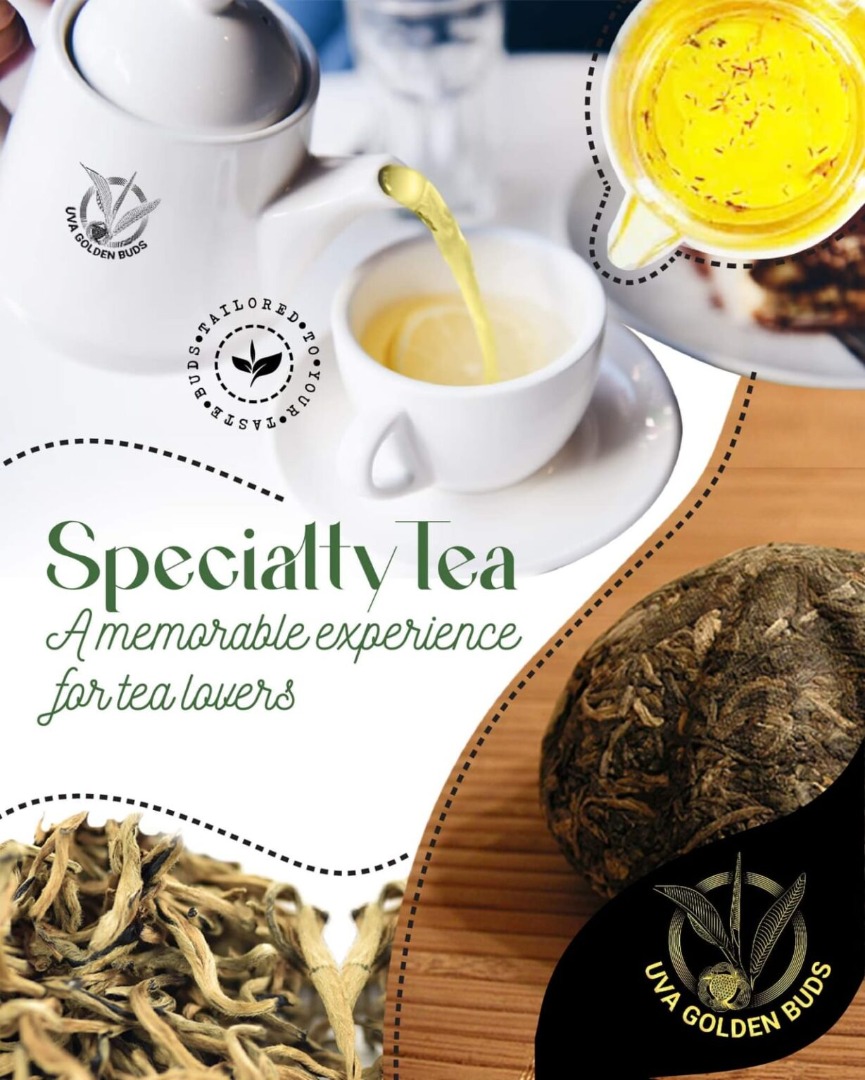
There are different types of teas popular among tea consumers. Have you heard about the specialty tea which caters a niche market segment in the world tea market? This category of teas is mainly consisting with white tea, yellow tea and post fermented tea. Mostly these specialty teas are coming as loose type large particle teas. Shall we look these different specialty teas bit closer to know their characteristics well.

White tea, which is a type of specialty tea is considered as a non – fermented tea. Hairy tea buds are hand-picked from tea bushes carefully. Then these buds are allowed to air dry which result a white colour hairy appearance. Liquor of these white tea is very special with respect to their light yellowish appearance and special aroma along with the special taste. Minimal processing and non – oxidation is the key to these special characteristics of white tea.

The other type is yellow tea. This tea is very similar to green tea but unique with its yellow coloured liquor with fruity or the grassy aroma and gentle taste. In the processing of this yellow tea there is a special step called ‘sealed yellowing’. Most of the times tea leaves are fermented to a certain degree and conduct this process of sealed yellowing. 

Turmeric, cinnamon lemon juice, clove and black pepper are often use as ingredients of yellow tea. Because of this various ingredient combination, it is believed to have various health benefits by drinking yellow tea. Weight loss, prevention of diabetic and enhancement of liver health is most popular health benefits of this yellow tea. Other interesting factor of this tea is it has various traditional processing methods adapted by different producers around the world.

Post fermented tea is another specialty tea that is also called ‘ripened tea’. This is indeed a very special tea among all types of teas since it involves the ‘microbial fermentation’ process. Processing steps of these post – fermented tea consist withering then killing green or enzyme suppression which are prior to the special fermentation process. Tea leaves which have undergone first two steps are compressed and makes in to piles or cakes. These piles are store in a specially prepared rooms or in small quantities clay pots may be used to store them. This ripening process takes years may be decades. In ancient times these dark teas were used to seasoning goat milk, yoghurt and nuts etc.

China and Japan are the major countries of producing and consuming these specialty teas. In addition, India (Darjeeling type) is also produce specialty tea. Also there is a potential and emerging specialty tea production in Sri Lanka. If you haven’t tasted the specialty teas yet, this is the perfect time to taste them with a better knowledge. 


Traditional Tea Ceremonies

Traditional Tea Ceremonies

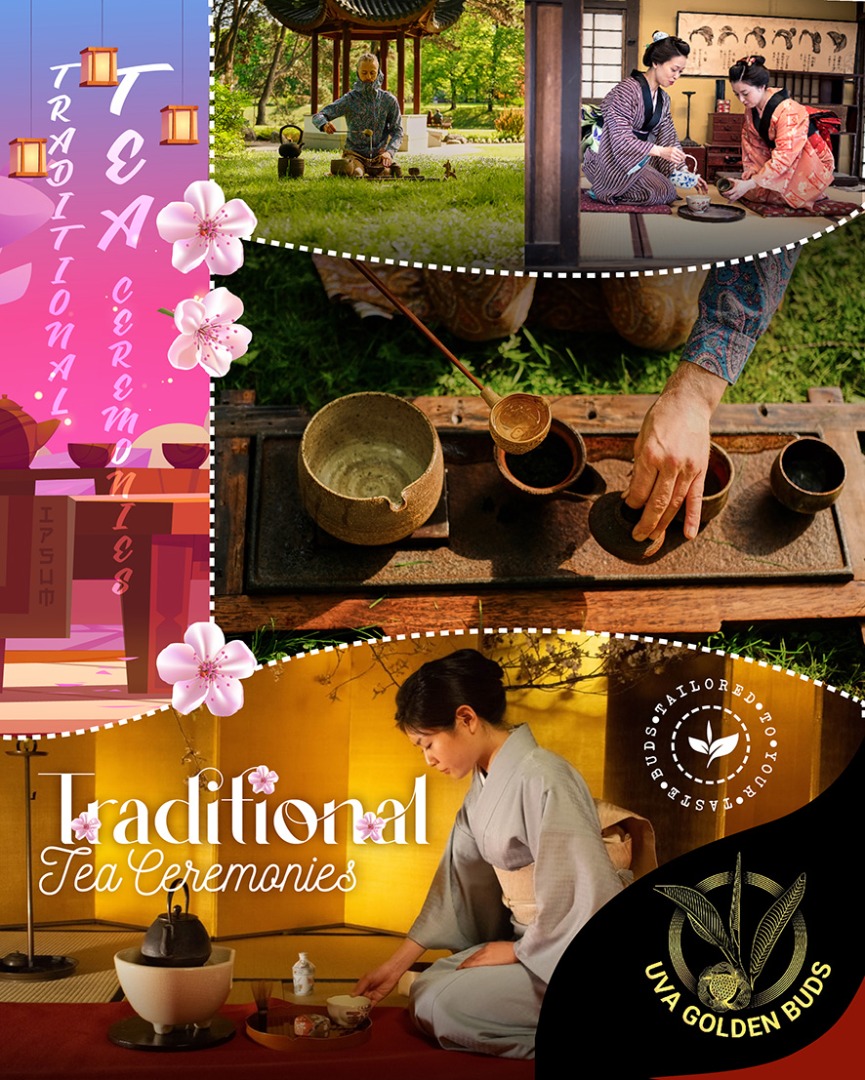
Tea is a most popular beverage all over the world. We may drink tea as a daily routing or habit. Have you ever thought that drinking tea became a ceremonial event in your life what would it looks like? Yes, there are such ceremonies called ‘Traditional Tea Ceremonies’ in some countries. 

We will explore the most prominent tea ceremonies or tea traditions around the world. Asian countries take the lead in traditional tea ceremonies. China and Japan are the popular countries which are continuing the tea ceremonies as a part of their culture. In addition, Korea, Morocco, Russia, Turkey, Tibet, Argentina, Iran and many more countries are having tea tradition of their own which is a part of their culture. Now we will closer look at the most ancient and special tea ceremonies from the above list.

China take the first place of the list since it is the initiative country of these traditional tea ceremonies or traditional tea culture. In China, art of brewing and serving tea is called ‘Cha Dao’. This ceremony is specially focused on feeling the aroma and the taste of tea. The tea server is specially trained for these traditional ceremony. Small clay pot is used to brew the selected tea type. 

First this pot is washed by the hot water which is as same temperature to use brewing the tea. Then the selected tea leaves will be poured in to the pot using bamboo spoon or chopsticks. As a special procedure poured tea will be undergone a quick washing with same hot water which use to brew the tea. Then the server will brew the tea with right volume of the water in proper temperature. After a certain time, mostly within few minutes, brewed tea will be poured in to the cups of guests as two third of the cup is filled. Then teas will be served to the guests. According to the tradition finishing tea with three sips would be considered as a respectful behavior. In ancient China, knowing the tea tradition by a woman has been considered as a qualification be a bride of a rich and honorable family. It explains the well about how deep this tea tradition has been connected with the culture.

Major attribute of the Japanese tea ceremony is experience calm nature and enjoy the relaxation. In Japan there are two major tea ceremonies which are called Matcha (Chanoyu) and Sencha. Matcha is the most popular ceremony among them where four guests are invites. In this tradition tea maker or the server is called as Teishu or Tea Master. Most of the times this Matcha ceremony is taking placed in tea houses surrounded by small garden full of green trees and rock arrangements called rock gardens. During this ceremony you have to be formal and stick to the traditional methods. The guest cannot enter the tea house in a hurry as they wish. You have to wait in the garden entrance until tea master let you enter the garden where tea house is located. Tea master will serve you some water to wash your hands and let you enter the tea house then. After you enter the tea house tea master will prepare the Matcha tea (powdered green tea) using bamboo wisk and traditional Japanese ceramic tea bowls and serve them in small quantities poured in to tea bowls. Usually sweets are served to the guests with these matcha tea due to its bitter taste. Now comes the specific tradition of drinking tea in this ceremony. When the tea master serves the guest his or her tea, they bow and take it by their left hand and transfer it to the right hand and place it on the table. Then guest circulate or turn the cup in right circular to avoid drinking tea from the side that facing him or her as tea master served them. It is considered as that the guest is not worthy enough to drink from the side tat master server the tea as it is the best side of the cup. It is considered as an act of respect towards the tea master. As most of the Japanese people are not belong tea houses they become the members of a tea clubs and enjoin these traditions often. That will explain how much they love these tea ceremonies.

Now you have earned a detailed knowledge on world’s most ancient and unique tea ceremonies. Hope you will dig in to the interesting traditions of the other tea cultures around the world to fulfill your curiosity.


Beauty of the tea world – Blooming Tea

Beauty of the tea world – Blooming Tea

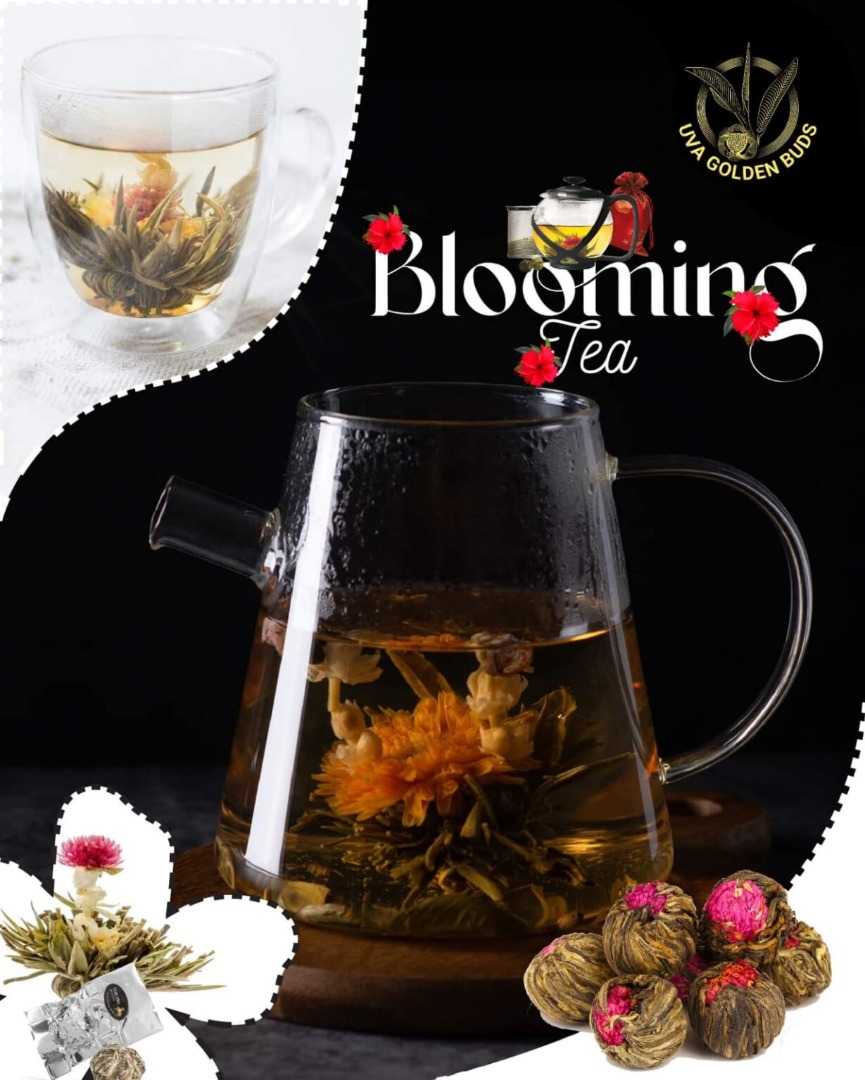
Blooming tea is a very good example that proves tea is not all about the black tea. Blooming tea is also called as flowering tea since the appearance. You may think now how this blooming tea made. Both tea buds and tender leaves are used in making blooming teas together with edible type dried flowers. Chrysanthemum, jasmine, lily and hibiscus are common examples for the types of dried flower species used in blooming teas.

When it comes to tea buds, hairy and silvery natured unopen tea buds are mainly preferred for this blooming tea manufacturing. Hand-picked undamaged tea buds are ideal for light liquor flowers. First these fresh buds are assembled around a dried edible flower. Then this bunch of tea buds with the dried flower will assemble using a cotton thread. Next the bunch will be wrapped in a cotton or cheese cloth and let dry in an oven (preferably microwave or electrical oven) for desired time. Now you have a white or yellow tea ball. Considering the shape, you can alternate this round shape with mushroom shape, cone shape or any other shapes with the creativity. Withered tender tea leaves can also be used to prepare this flowers. In that method, withered tender leaves of tea will be hand rolled and let them fermented slightly. 

Then the similar procedure is followed as above. But the liquor characteristics are different from the non-fermented type. Tea flowers made of this method will have an infusion as the light liquored black tea of orthodox type.

Next important thing is the infusion process. Infusing these blooming tea is a kind of art. Not as other types of teas these teas are prepared in transparent containers to view the blooming process by the consumer. It is such a lovely experience that a tea lover must gain. Blooming tea particle will be put in a glass container and hot water will pour on the blooming tea and it will begin to bloom slowly exposing the middle flower covered by tea particles. Reading this will help you to imagine the beauty of blooming process. Then the consumer can drink the tea with looking the blooming flower inside the container. Because of the edible flower in the blooming tea it has specific health benefits. Most popular health benefits are anti-cancer properties driven by its antioxidant activities and lowering harmful blood cholesterol level.   

As a tea lover, it is worth to know the history of this flowering or blooming tea. these type of teas are first made in China during 1980s. After few decades it was popularized in western countries. At present tea consumers all over the world knows about blooming tea. 


Chemical Composition of Black Tea

Chemical Composition of Black Tea

Have you ever interested in searching the composition of the tea that we are drinking regularly? Well, even there are different types of tea as black, green, yellow and white etc. all are produce using the tender shoots of Chamellia sinensis plant. Before examine the chemical profile of black tea it is important to know the chemicals in tender tea shoot.

Tender shoots mainly contain flavonoids. These flavonoids can be identified as different types. Epigallocatechine gallate (EGCG), Epigallocatechine (EGC), Epicatechine gallate (ECG), Epicatechine (EC), Gallocatechine (GC) and Catechine are the major types of flavonoids in tender tea shoots. Next major chemical is phenolic acids. Caffeine in this tender shoots act as the stimulating agent in tea. In addition, amino acids, carbohydrates, organic acids and volatile compounds also present in tender tea shoots as considerable compounds.

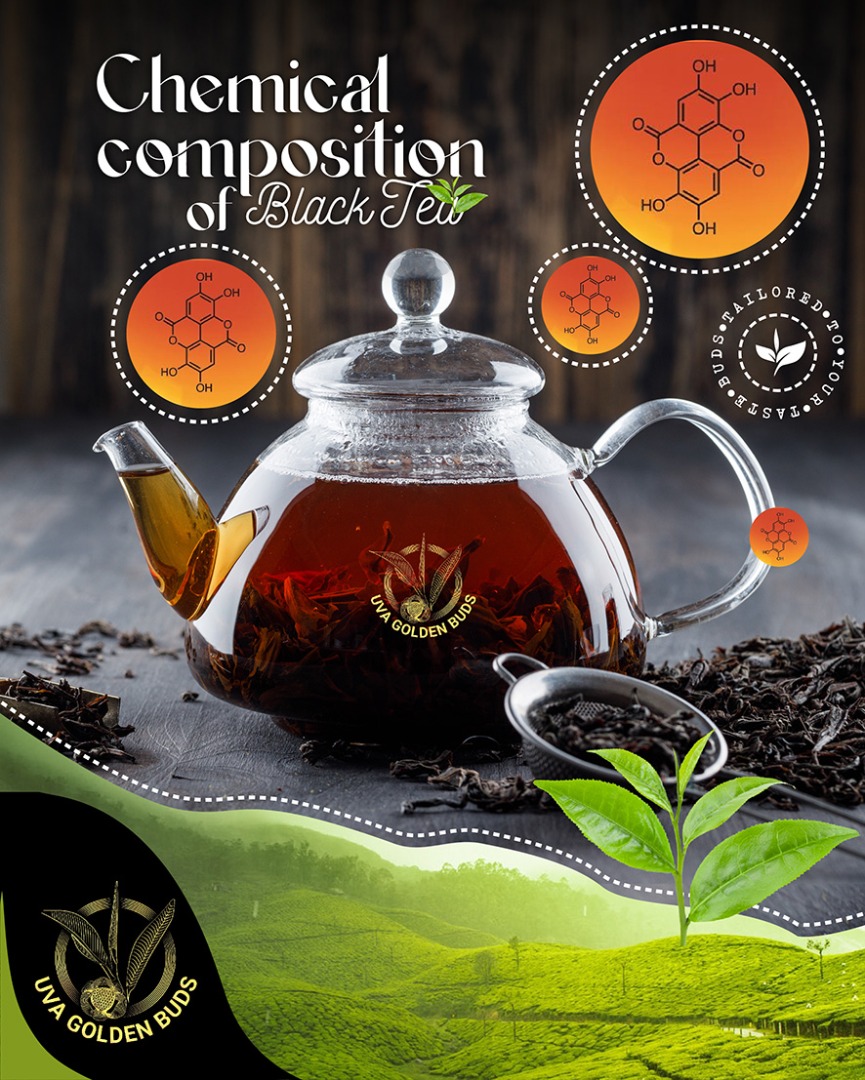
With the knowledge of the chemical profile of tea shoot, let’s explore the chemical composition of a black tea cup. When it comes to the black tea brew, it contains about 0.35% of tea solids in hot water. This tea solid mainly contain polyphenol as the major chemical compound. Among the poly phenols thearubigins takes the highest contribution along with other poly phenoles nearly 23% of the total chemical composition. 

Next comes the catechines as 10% followed by thiaflavins as less than 5%. This is the composition of the important chemicals which are responsible for the special liquor characteristics. Not only these chemicals simple polyphenols, flavonoles, thianine, amino acids, organic acids, caffeine and protein etc. also present in black tea brew.

Thiaflavin and Thiarubigins are responsible for the brightness, strength, colour and aroma of black tea. These two chemicals are formed by oxidation process of polyphenols in the processing of black tea called as fermentation. Amount of Thiaflavin and Thiarubigins is depend on the degree of fermentation. According to research, optimum ratio of Thiaflavin and Thiarubigins is 1:10 for forming a good quality tea. Ratio of these two chemicals make the black tea unique from the other types of teas. Exceeding the maximum ratio of Thiaflavin and Thiarubigins will results the low quality bitter taste teas with darker dull liquor. Another special characteristic of the tea is low sodium content which make tea a good beverage for people with high blood pressure. Caffeine is the cause that make the tea is a stimulating drink which consider it as a morning drink.

There are many more health benefits with respect to these antioxidants and other specific chemicals present in black tea. Next time we will read about those benefits. Until then you can search further to fulfill your thrust of knowledge.


All about Dark Tea

All about Dark Tea

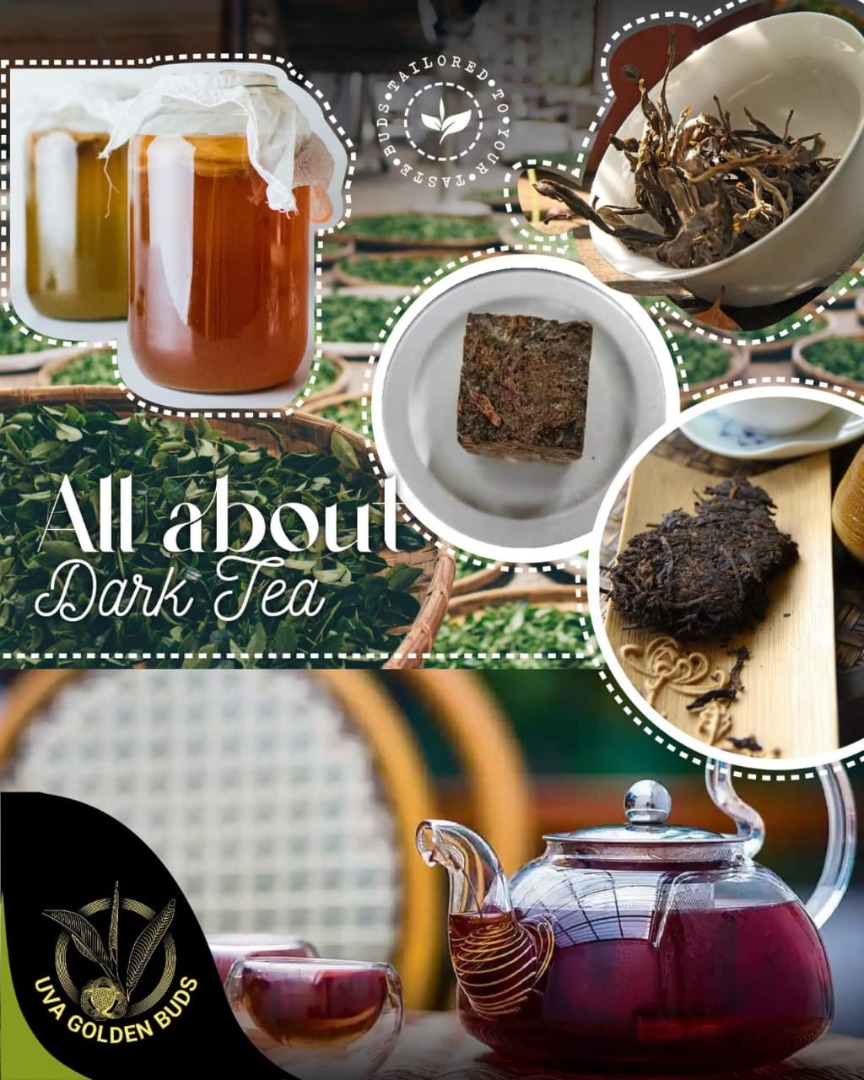
Dark tea or post fermented tea is a type of black tea which involves the microbial fermentation process. To have a better picture, it is important to understand the processing of the dark tea. First step of the dark tea processing is withering which is common in normal orthodox tea processing. Next comes a one of the special step in the processing called killing green or enzyme suppression to avoid the chemical reactions. This enzyme suppression is done by exposing withered leaves to hot steam or slight roasting in a heated pan. With the high temperature exposure, enzymes are deactivated as they are proteins. Withered leaves after kill green process will be slightly rolled or compressed. In this compression process withered leaves are wrapped in a cotton clothes and compresses in to different shapes. Different types of native tools are used to prepare these teas in to piles, cakes or any other shapes.

Next is the special process, microbial fermentation. Prepared tea piles will be stored in clay pots and kept in a dark room specially designed for this fermentation process. The time of fermentation will vary from several months to years or decades. Considering the microbes involve in this fermentation process, Aspergillus niger and Aspergillus luchuensis. There are prominent and popular shapes in preparing dark tea piles. Bamboo leaf shape, square shape, small round tea cakes, fruit shape tea piles and brick shape are some examples.

 Most popular types of fermented teas are ‘Combucha tea’ and ‘Pu Erh tea’. Liquor colour of the dark tea is a special feature which is most similar to dark wine colour. China and Japan are the two major countries in dark tea production. In addition, Korea, Thailand, Burma and Tibet also produce native dark teas of their own.

Considering the health benefits of dark tea there are many more of them as traditional beliefs. Also some of them have scientifically proved. It is believed that the microbial metabolites composition in dark tea is responsible for the unique health benefits of it. Consumption of Pu Erh tea will increase your cardiac health and clean the toxins and free radicles in your blood. According to studies Pu Erh tea has an anti-cancer properties and weight loss effect also. Consuming Combucha tea will strengthen your immune system. Also Combucha tea is act as a digestive aid and reduce the inflammation. All of these dark teas are act as a good stimulation agent and boost your energy.

Explore more about this dimension of tea and get the experience and the benefits in your hand. 


Manual Plucking of Tender Tea Shoots

Manual Plucking of Tender Tea Shoots

Do you ever think how these teas are come to your cup from the plant? It is indeed a very much interesting story. Let’s learn the first step of it today. Harvesting or plucking of tea shoots is the very first step of this process. As we all know tea is a perennial crop which is maintain in vegetative stage as a bush. Tender shoots are harvested from tea bushes for manufacturing of different tea types. This harvesting can be done manually or mechanically. We will look in to the way of manual plucking of tea in this article.

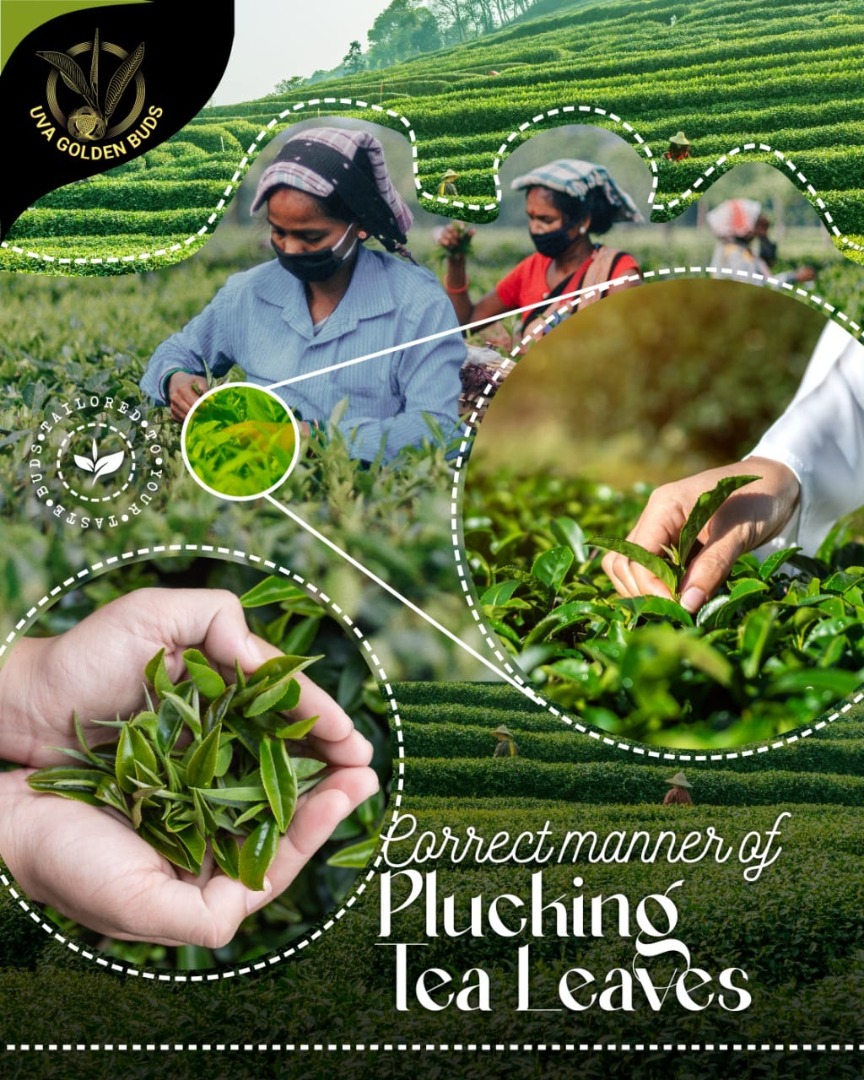
First let’s have an idea about suitable types of shoots in a tea bush for plucking. Suitable tea shoot for plucking includes unopen bud and one, two or three tender leaves. In addition, immature bangies also suitable for plucking. Selective plucking of immature or tender shoots has a huge effect on producing quality teas. Since these immature shoots are rich in polyphenols, they can contribute on producing teas with god liquor, aroma and taste. Teas that manufactured using these leaves at correct maturity have less amount of fiber. So that the market value will also be higher.

Manual plucking is the most ancient and basic method of tea harvesting. But it is more important because it is a selective method of plucking. Tea pluckers are use their thumb and 2nd or 3rd finger to pluck the tender shoots from the tea bush.

These leaves are hold in their fist and put them in to the plucking baskets. Holding these plucked leaves for long time in fist cause them some damages that leads to fermentation. This fermentation effect will effect on manufacturing quality of the tea. it will result over fermented dull coloured teas as final product. Then these plucked leaves will weight and transported to the factories for tea manufacturing.

There are special plucking requirements in some special types of tea manufacturing. One is silver tip production. Silvertip is a type of white tea which need to produce with suppressed fermentation. For this manufacturing only the hairy bud of a special tea cultivar is used. So it need to pick only the unopen bud without damaging it to avoid the heavy fermentation. For that purpose, pluckers are trained to pick the bud carefully without damaging it. These buds will be collected to small containers which facilitate the ventilation to avoid heat damage.

These are more highlighted points in tea harvesting by the traditional manual method. Next time we will look in to the modern methods of tea harvesting.


Tea and Ceramic Arts

Tea and Ceramic Arts

As we all know history of tea goes to 2700 BC. When tea is started consuming as a stimulating beverage, tea related culture and tools were developed. Tea related Ceramic art is one of an interesting field which is having an esthetic feature as well.

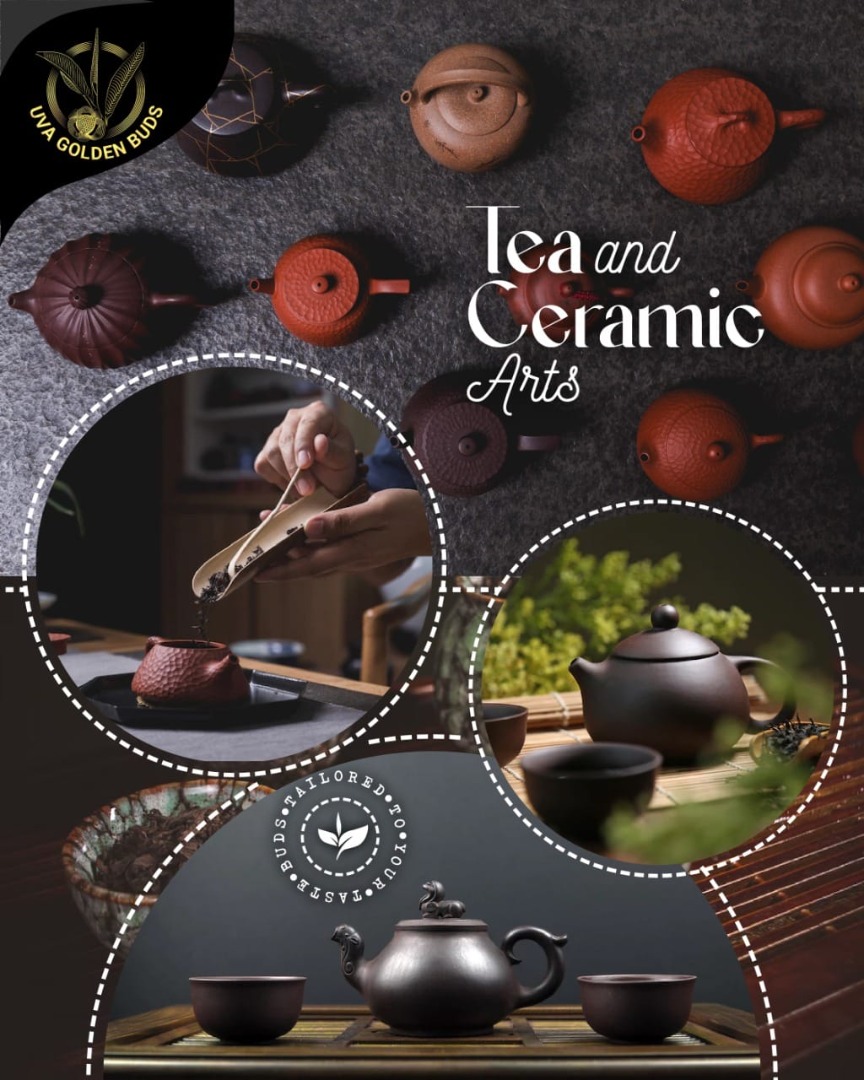
According to history experts, history of tea pots goes to 1500 BC. These tea pots were made with clay which is specially known as Yixing clay tea pots. Yixing tea pots are in several designs in different shapes with esthetic values. Yixing tea pots are made with special types of clay called ‘Zisha’ clay which is available in purple, red and beige colours. Whole processing is completed by manually. This tea pots are mainly use for brewing tea types like black tea, green tea, white tea and oolong tea. Yixing tea pots are special in certain characteristics. Major one is the unique mineral composition of the clay type that used to make these pots. This composition is enable the pot to absorb the aroma and flavor compounds of brewed tea. This absorbance will make pot a unique smoothness and appearance over the time.

When it comes to the designs of ceramic tea pots, there are main two different designs. One is the tea pot with a straight handle attached to the side of the tea pot which made with clay usually. This type is mostly popular in Asian countries like Japan, China and Korea.

The other type is pots with curved handle attached to the upper opening or the sides of the lid fitting area of the tea pot. This second type has the metal handles in most cases and popular all over the world.

In addition to tea pots there are ceramic tea sets comprised with tea pot and small tea cups. Considering these tea cups there are different types of popular designs. Most of the times traditional type tea cups have designed without a handle. They can be in plain clay colour or painted with a traditional design. Many tea sets are contained four to six tea cups with a traditional tea pot. These ceramic tea sets have a remarkable role in traditional Asian Tea Ceremonies.

In addition to these pure clay pots there are porcelain tea pots and tea sets as well. They are very popular in European countries and some Asian countries too. However, considering these interesting fact it can conclude that the traditional ceramic ware plays a major role tea culture.


Health Benefit of Tea

Health Benefit of Tea

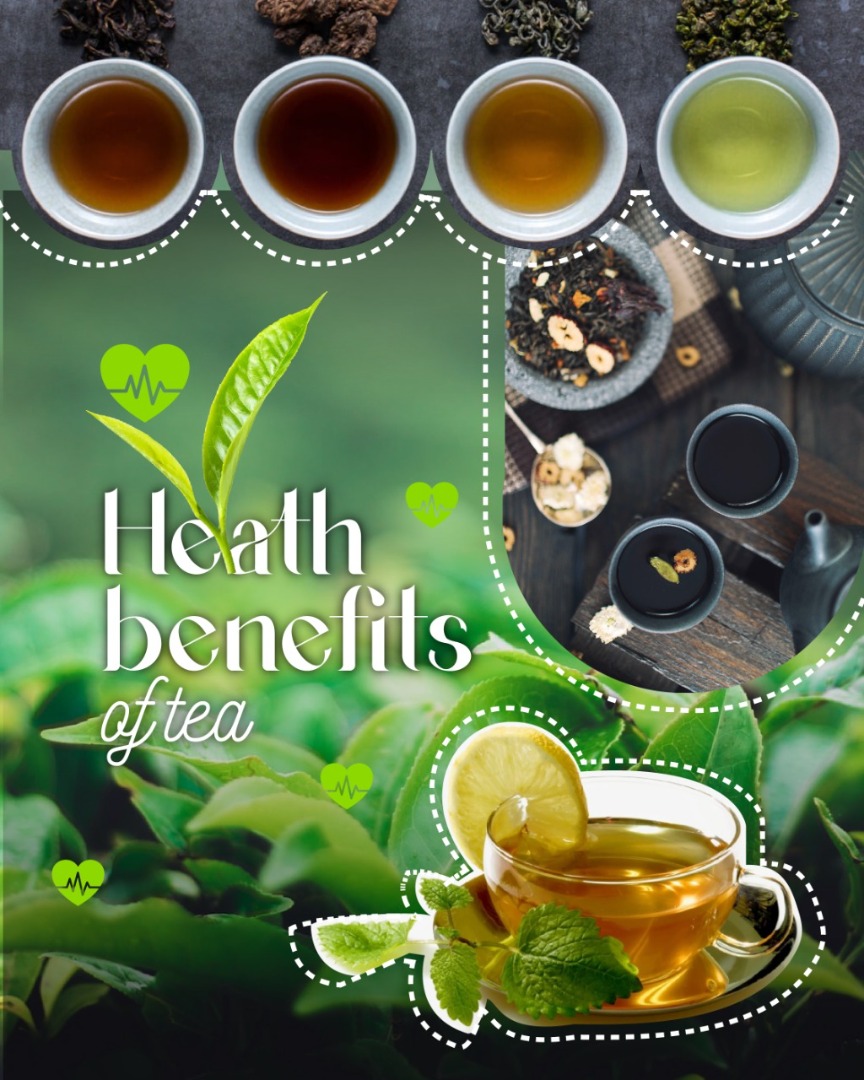
Tea is popular all over the world as a stimulating drink. In addition to the stimulation effect tea has much more health benefits with respect to its chemical composition. Since Black tea and green tea are the most commonly popular types of teas, this will mainly focus on their health benefits.

As we all know black tea is a most popular morning stimulant that many of the tea consumers are like. Black tea is a good source of antioxidants. Polyphenol is the major antioxidant present in black tea. antioxidants can remove the free radicals present in our body. Free radicals are caused for forming atherosclerosis which is a plaque that forms in arteries. These plaques will lead you to chronic heart diseases and strokes. But the antioxidants present in black tea will reduce the amount of free radicals in our body and act against the forming of atherosclerosis and lead to lower the risk of heart diseases and strokes. Also consumption of black tea will help you to avoid hypertension. Also black tea is helpful in lowering the risk of diabetes. According to some studies it is much effective in type 2 diabetic patients. In addition, black tea prevents forming dental cavities since it contains fluoride as a component. Most importantly studies suggest that black tea acts against cancer risk. This may cause the act of black tea against the free radicals. Most of the times free radicals are the cause of forming mutations in cells and enhance the growth of abnormal cells. By removing and reducing these free radical amount in body, black tea will reduce the risk of cancer formation.

Moving to green teas there are specific health benefits related to its unique chemical composition. Most popular health benefit of green tea is fat burning. According to some studies this is because green tea can increase the fat metabolism and boosting the overall metabolism process of the body. Since this effect green tea is very popular among ladies who are loving a slim figure and weight loss. Similar as black tea, green tea also has the cancer preventive properties. Since green tea contain much of the non – oxidized polyphenols it is rich in antioxidant properties. Some are believing that green tea can improve the brain functions. Caffeine is the respective ingredient for this influence in brain function. Also some studies revealed that catechins in green tea lower the growth of oral bacteria and act as a solution to bad breath.

Here in this article, highlighted the major and popular health benefits of frequently used tea types. If you are interested in knowing the benefits of other tea types you have access to our blog articles like herbal tea, green tea etc.